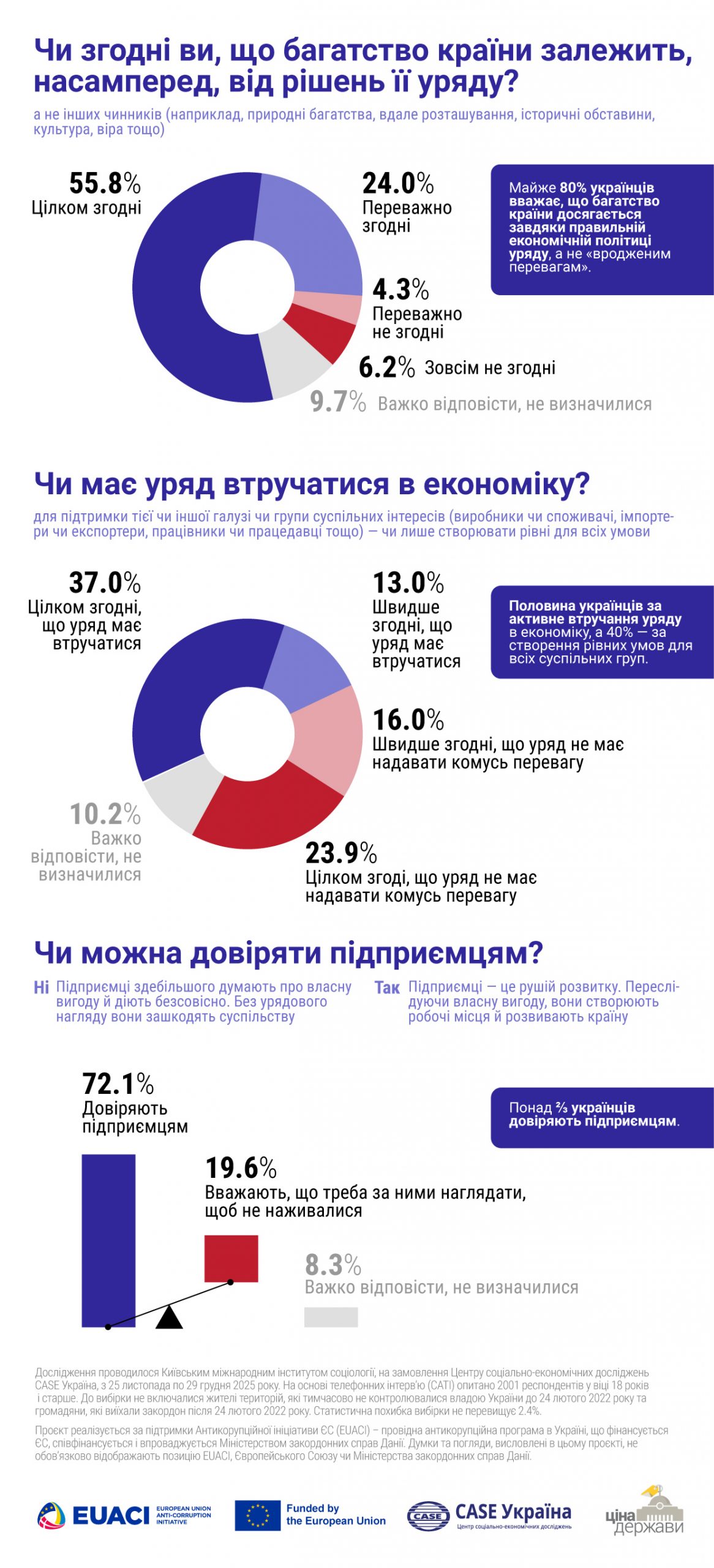
The vast majority of Ukrainians believe that the country’s prosperity depends primarily on the government’s sound economic decisions, rather than on natural resources, geography, or historical circumstances. At the same time, public opinion is divided on the role of the state in the economy: half support more active government intervention, whilst a significant proportion advocate that the state should merely establish a level playing field.
This is evidenced by the results of a nationwide survey of the adult population of Ukraine, conducted by the Kyiv International Institute of Sociology on behalf of the Centre for Social and Economic Research (CASE Ukraine).
Economic policy is more important than “circumstances.”
When asked whether they agree that countries become wealthy primarily thanks to the government’s sound economic policy, 79.9% of respondents answered in the affirmative. Only 10.5% disagreed, whilst a further 9.2% were undecided.
This is an important signal: Ukrainians generally recognise the importance of economic decisions and reforms for the country’s development. At the same time, the level of agreement is higher among people with higher education than among those without. Also, the ‘hard to say’ response becomes more common with age.
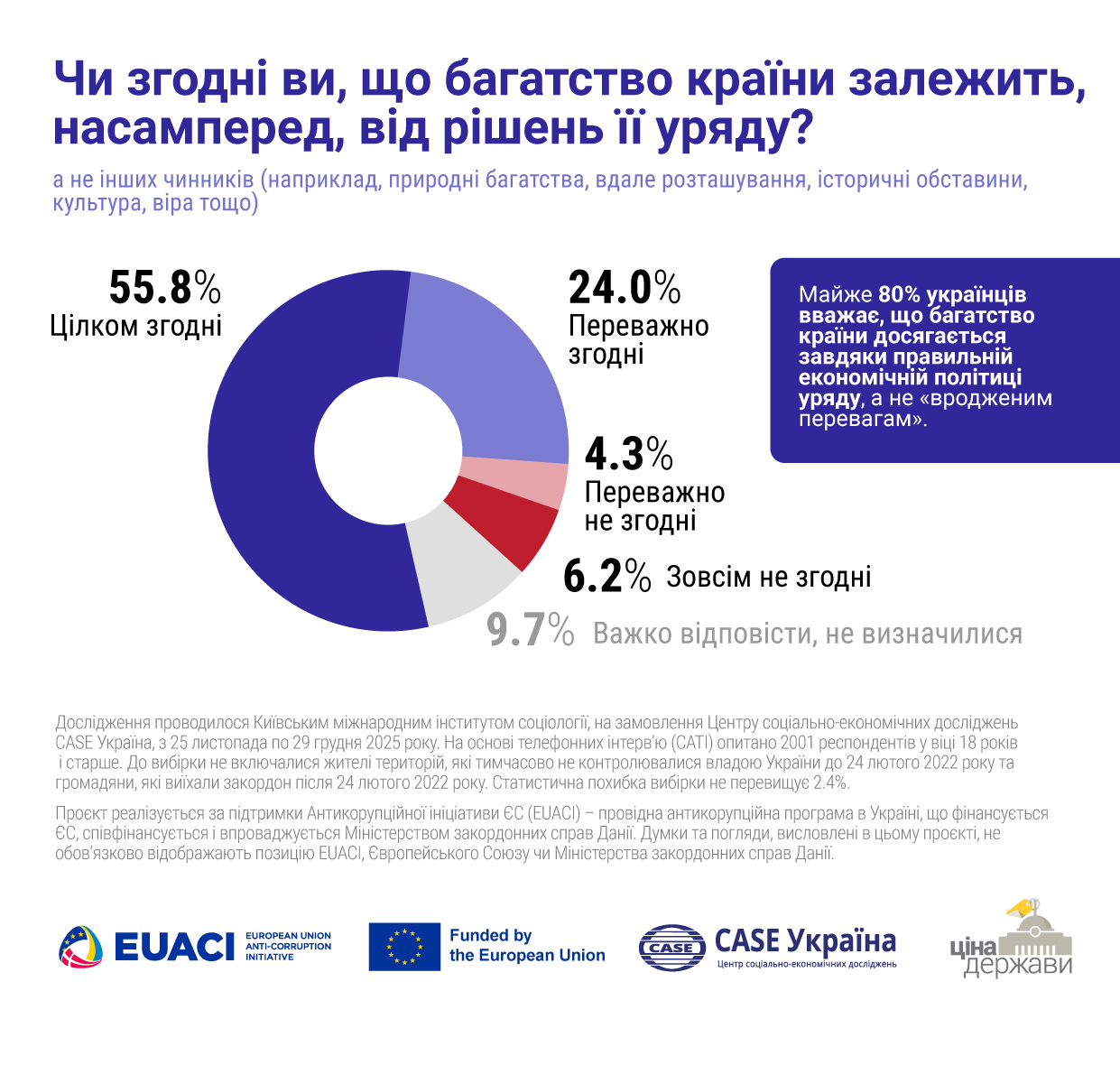
Public opinion is divided on state intervention
Opinions among Ukrainians are divided on the question of whether the government should intervene in the economy and support individual businesses or sectors, or simply create a level playing field for all without giving preferential treatment.
49.9% believe that the government should intervene more actively and support individual economic actors. In contrast, 39.9% are convinced that the state should not ‘play favourites’ with anyone, but should ensure a level playing field for all. A further 10% are undecided.
There are clear social differences here. Women are more likely to support a more active role for the state, whilst among men, the positions are almost evenly balanced. Age also has a significant influence: older people are much more likely to advocate government intervention, whilst younger people favour non-intervention. The influence of education is also noticeable: among those with higher education, support for a level playing field without state favouritism predominates, whilst among those without higher education, the opposite is true—there are more supporters of active government intervention.
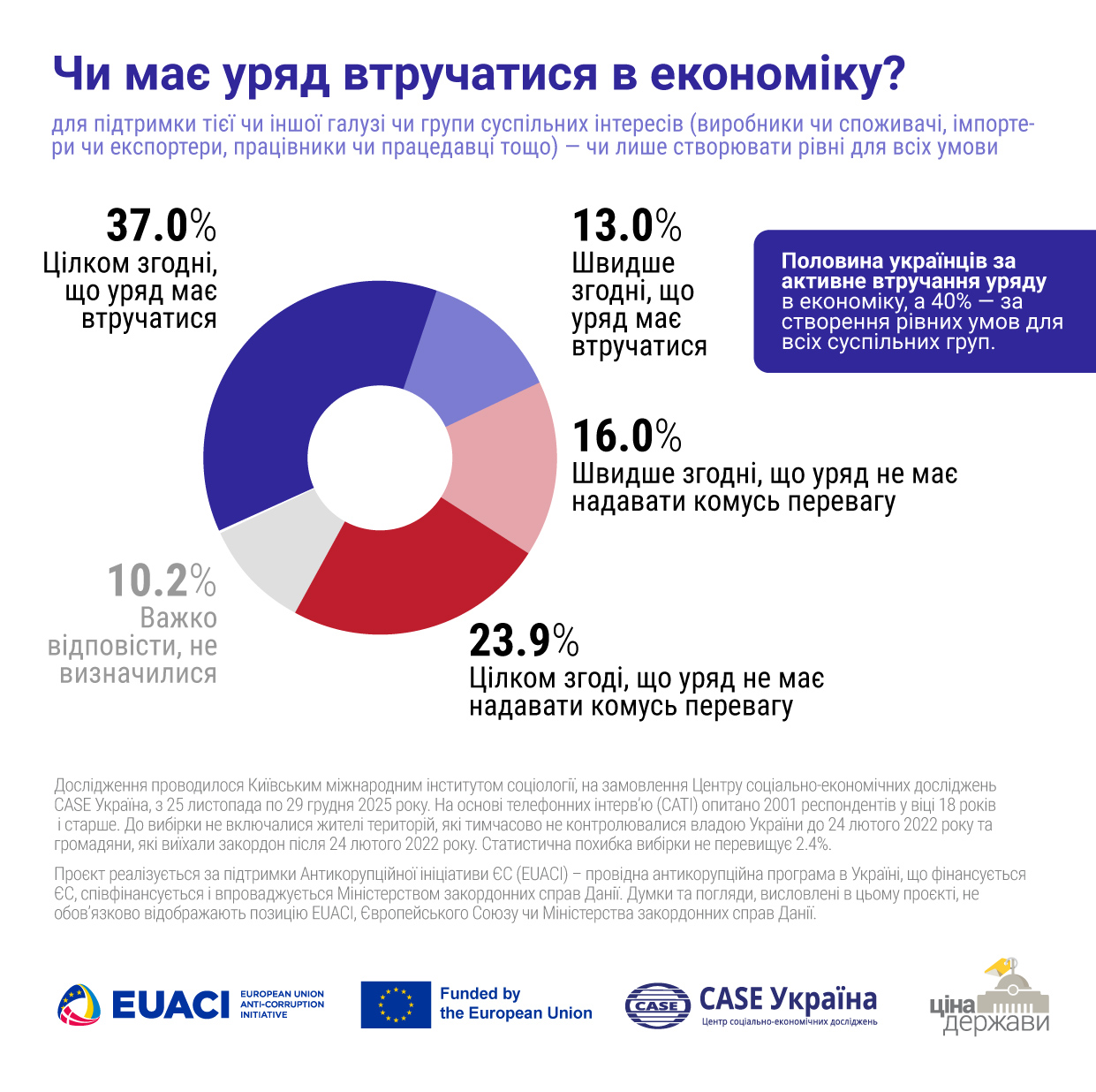
Ukrainians generally view entrepreneurs positively
Another telling finding concerns attitudes towards entrepreneurs. Despite the widespread stereotype of mistrust towards business, 72.1% of respondents agreed that entrepreneurs can be trusted and that there is no need to tighten controls over them simply out of fear that they will ‘line their own pockets’. Only 19.6% took a more cautious stance, whilst a further 8% were undecided.
The level of trust in entrepreneurs depends particularly on education: it is significantly higher among those with higher education. At the same time, there is almost no age difference here, with the exception of the youngest group, where attitudes are somewhat more reserved.
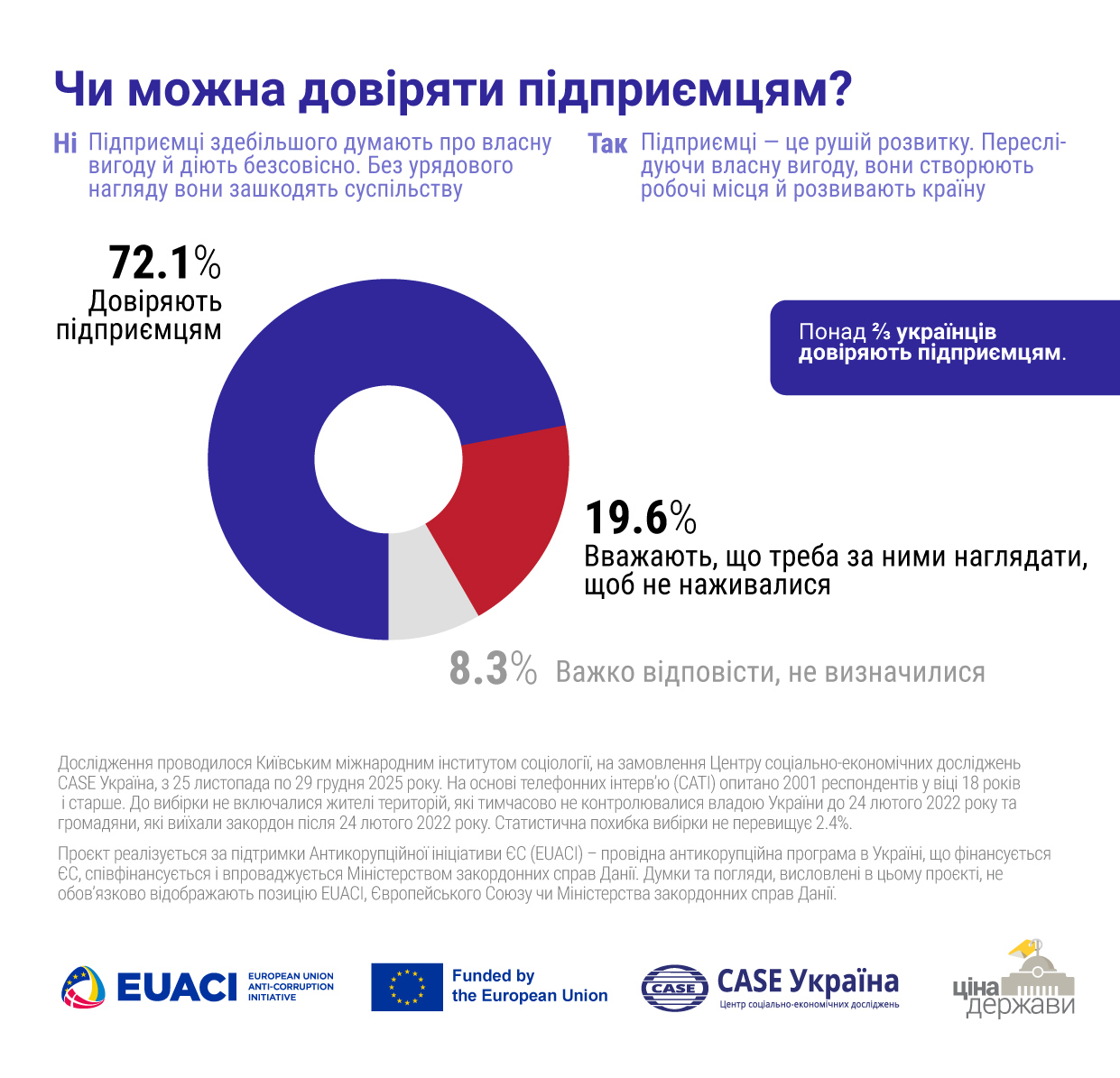
The survey showed that public debate on the economy, the role of government, taxation, competition and entrepreneurship remains highly topical.
The survey was conducted by the Kyiv International Institute of Sociology on behalf of the Centre for Social and Economic Research (CASE Ukraine) between 25 November and 29 December 2025. A total of 2,001 respondents aged 18 and over were interviewed via telephone (CATI). The sample did not include residents of territories that were temporarily not under the control of the Ukrainian authorities prior to 24 February 2022, nor citizens who left the country after 24 February 2022. The statistical margin of error does not exceed 2.4%.
Full-size infographic